


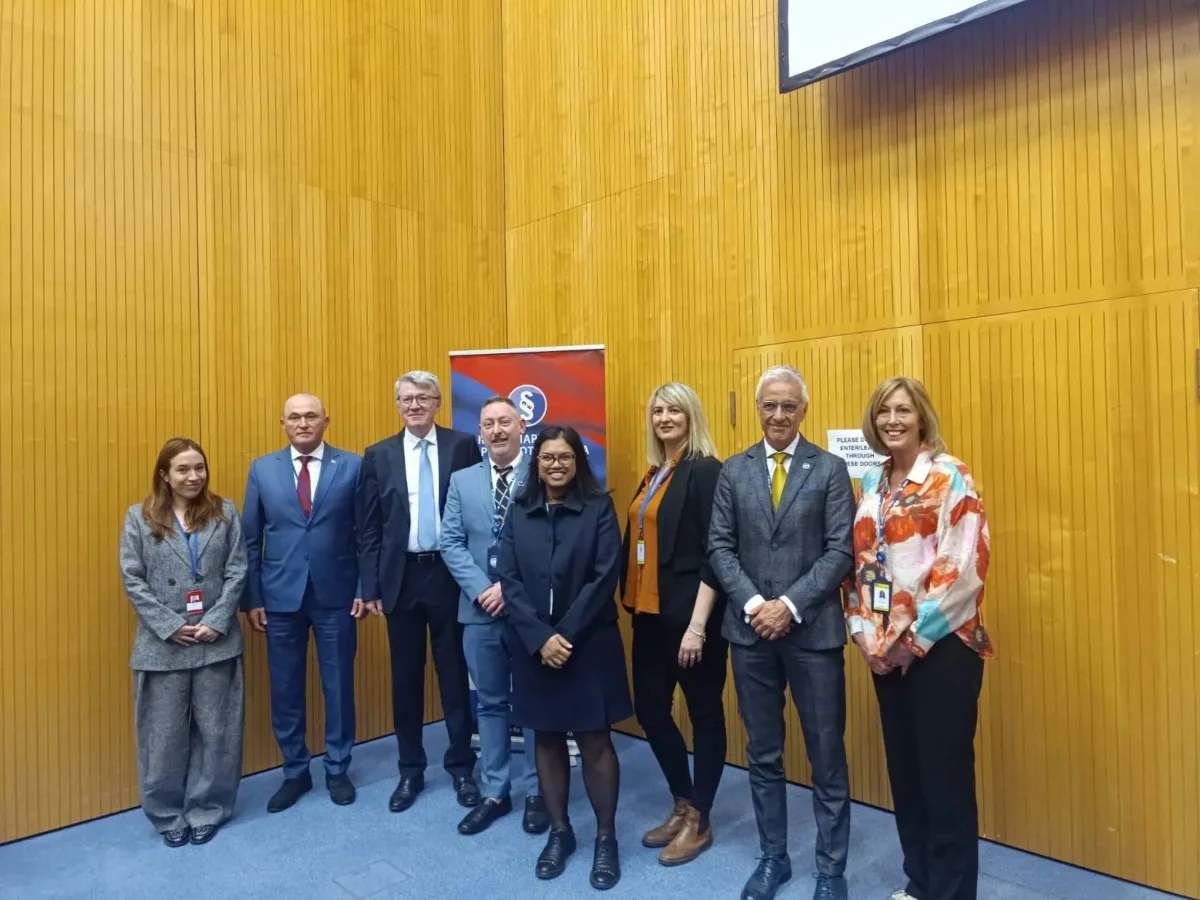
The Office for Combating Drugs of the Government of the Republic of Serbia organized a round table entitled “Enhancing Cooperation within Demand Reduction Activities” on the margins of the 69th session of the Commission on Narcotic Drugs (CND), with the aim of strengthening international cooperation and promoting an integrated approach in the field of drug demand reduction.
The round table was held on 10 March 2026 in Vienna, in person and in a hybrid format, and brought together representatives of United Nations Member States, international organizations, academia, and civil society organizations.
The opening remarks were delivered by H.E. Prof. Dr. Žarko Obradović, Ambassador and Permanent Representative of the Republic of Serbia to the OSCE and other International Organizations in Vienna, who emphasized the importance of a balanced and comprehensive approach in shaping drug policies, as well as the significance of strengthening international cooperation in addressing contemporary challenges in this field.
The event gathered representatives of key international institutions and organizations, including the United Nations Office on Drugs and Crime (UNODC), the European Union Drugs Agency (EUDA), and the World Health Organization (WHO), as well as distinguished experts in the fields of public health, addiction treatment, and recovery.
In addition to representatives of the Republic of Serbia, the round table featured prominent international experts and representatives of international institutions, including Danilo Ballotta from the European Union Drugs Agency, Sanita Suhartono from the United Nations Office on Drugs and Crime (UNODC), Dr. David Paton from the University of Derby, Dr. Mark van Ommeren from the World Health Organization (WHO), Dr. Ed Day from the University of Birmingham, and Dot Smith from Recovery Connections, United Kingdom.
During the round table, contemporary approaches to developing activities in the field of drug demand reduction were presented, linking prevention, treatment, recovery, and reintegration into a single and coordinated support system.
Nina Grba, representative of the Office for Combating Drugs of the Government of the Republic of Serbia, delivered a presentation entitled “National Perspectives of the Republic of Serbia in Enhancing Cooperation and Support in the Field of Drug Demand Reduction,” presenting the institutional framework and the key elements of the national system in this area.
In her presentation, she highlighted the importance of an integrated approach that connects prevention, treatment, recovery, and social reintegration, as well as the importance of intersectoral cooperation among institutions at both the national and local levels.
In this context, examples of good practice in the Republic of Serbia were also presented, including the work of multidisciplinary teams, the role of therapeutic communities in the recovery process, and the functioning of the national early warning system for new psychoactive substances.
Particular attention was also drawn to current challenges in the field of drug demand reduction, including a significant increase in cases related to cocaine use. In some therapeutic communities, cocaine users currently account for more than 35 percent of programme participants, indicating the need for further adaptation of policies and treatment and recovery programmes to contemporary drug use trends.
Participants also emphasized the need to further strengthen intersectoral cooperation, ensure sustainable financing models, and develop evidence-based drug policies in order to provide continuity of support for individuals in the recovery process.
By organizing this round table, the Republic of Serbia once again confirmed its commitment to the development of balanced, comprehensive, and evidence-based drug policies, as well as its active participation in international efforts aimed at reducing the demand for drugs.