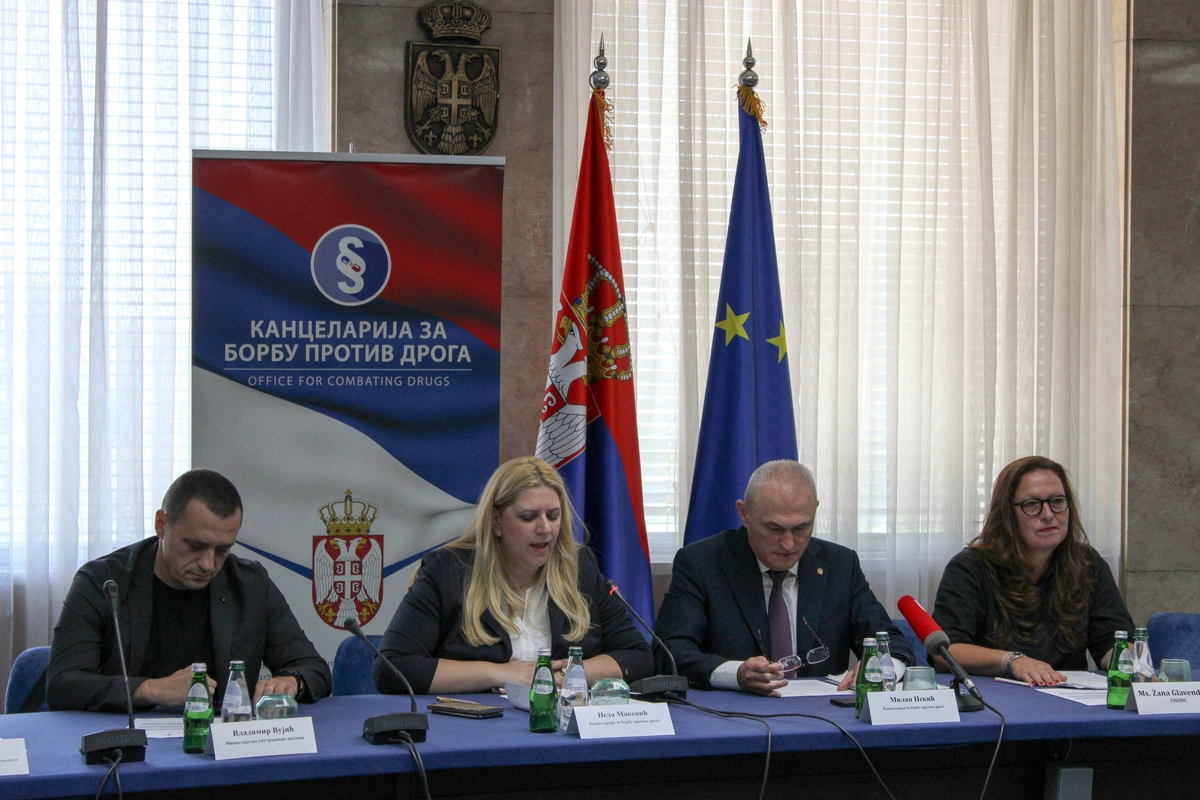
On 26 June 2026, the Office for Combating Drugs of the Government of the Republic of Serbia organized a conference at the Palace of Serbia to mark the International Day against Drug Abuse and Illicit Trafficking.
The United Nations General Assembly established this observance in 1987 to raise awareness of the global challenges posed by drugs and illicit drug trafficking, which threaten not only the health of individuals but also the well-being of communities and society as a whole.
According to the latest United Nations Office on Drugs and Crime (UNODC) World Drug Report 2026, by the end of 2024 approximately 331 million people worldwide had used drugs, representing a 34% increase over the past decade. This rise has outpaced global population growth, indicating an increase in the prevalence of drug use. The synthetic drug market continues to expand rapidly, showing no signs of slowing down. At the same time, it is estimated that only one in 12 people with drug use disorders receives treatment, while access to treatment is even more limited for women, with only one in 23 women with drug use disorders receiving treatment, compared with one in nine men.
The Report also highlights that drug traffickers continue to innovate, leading to an increase in the number of new psychoactive substances on the global market to 755 in 2024, of which as many as 118 were identified for the first time. It is further estimated that approximately 5.9 million people worldwide were in formal contact with the criminal justice system for drug-related offences during the same year, with around two-thirds of those cases involving drug use or possession. In addition, an estimated 3.7 million people were prosecuted, while approximately 2.2 million were convicted for drug-related criminal offences.
Every year, with the support of international organizations, government institutions, civil society organizations and numerous other stakeholders around the world, this global observance aims to raise awareness of the challenges that drugs pose to society. This year’s theme was: “The World Drug Problem: Enduring Challenges, New Threats, Innovative Responses.”
Mr. Milan Pekić, Director of the Office for Combating Drugs, opened the conference and emphasized that the exchange of experiences among conference participants, with particular attention to distinguished representatives of international organizations and regional partners, provides a solid foundation for improving cooperation and establishing new forms of partnership in the field of combating drug abuse.
The conference brought together representatives of key national and international institutions, including the UNODC Office in Serbia, the Ministry of the Interior, the Institute of Public Health of Serbia “Dr Milan Jovanović Batut”, the Special Hospital for Addiction Diseases, and the Institute of Mental Health. Distinguished experts from these institutions shared their professional
experience, presented the latest findings and data, and discussed current developments in the areas of drug prevention, addiction treatment, drug supply reduction, international cooperation and public policy development. Their presentations further underscored the importance of a multidisciplinary approach and continuous cooperation among all relevant stakeholders in effectively addressing the contemporary challenges of the world drug problem.